
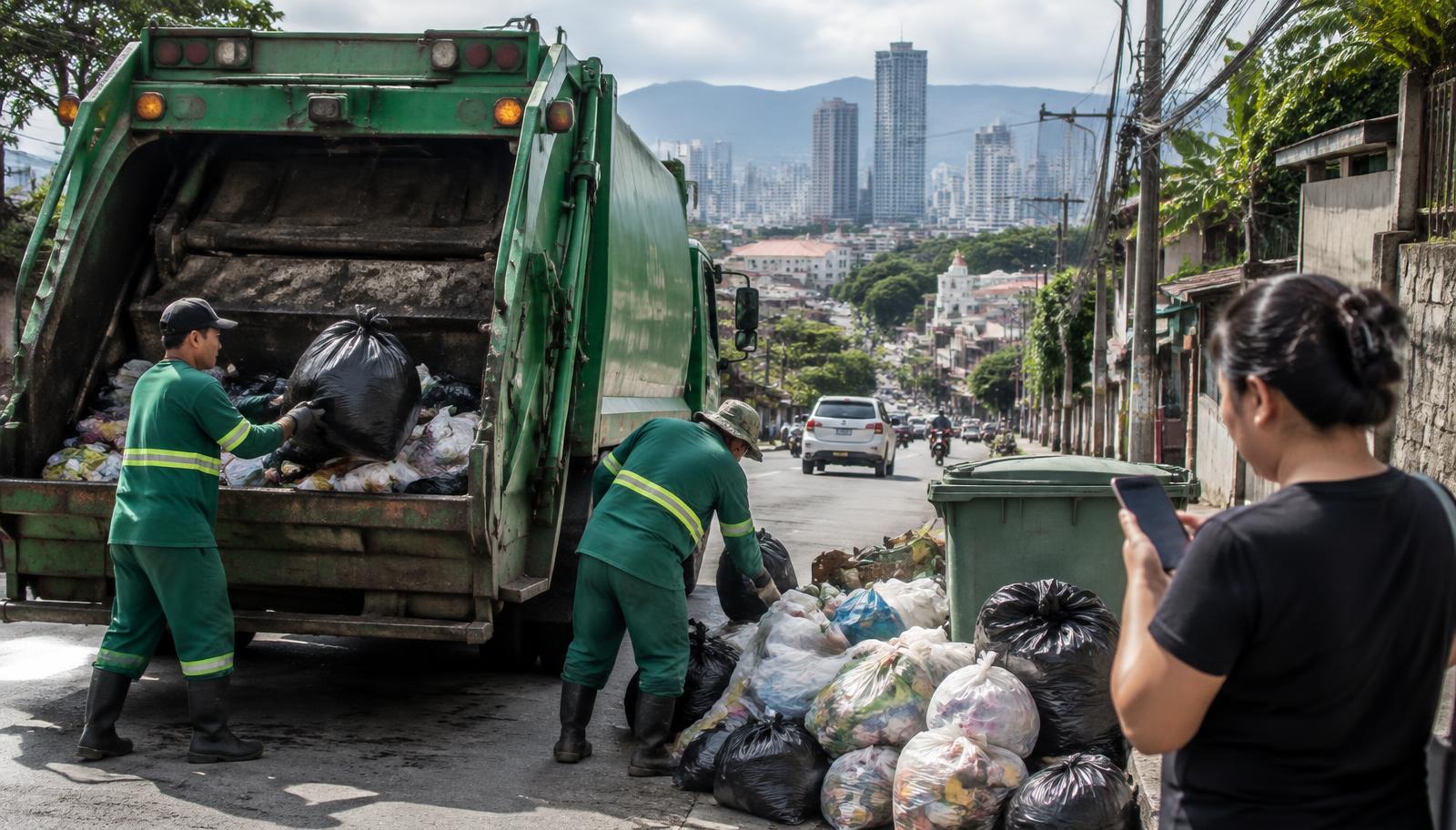
In late July 2026, Cebu City began limited pilot testing of Citizen Action 360, a digital channel for residents to report missed garbage collection, overflowing or unsanitary bins, and illegal dumping—and to track what happens next. Within days, Mayor Nestor Archival was also talking about a broader one-stop city app, with waste reporting as the first module and digital payments to follow.
That sequence is familiar across Philippine LGUs: when the physical system strains, the visible "smart" move is a complaint portal. The harder work—disposal sites, transfer stations, haul contracts, segregation incentives, and enforcement—remains stubbornly analog.
Cebu's experience since the early-2026 landfill disaster is a useful stress test of that reflex. It shows what citizen apps are good for, what they cannot fix, and what mayors, CIOs, and Department of Public Services (DPS) heads should demand the next time a vendor sells "smart collection."
What the city actually launched
According to The Freeman (28 July 2026), Citizen Action 360 lets residents create accounts, file waste-related reports, monitor status updates in real time, and send feedback to the city. The pilot was framed as bug-hunting and public participation before a wider launch, promoted through outreach, social media, and a QR code to the Citizen Action Portal.
CDN Digital (27 July 2026) reported the mayor's parallel plan: start with the garbage-reporting system, then phase in a one-stop mobile app for public services and payments, with gradual August rollout language—"testing first." Waste is the wedge, not the whole product.
None of that is trivial. Fragmented Facebook messages, hotlines, and walk-ins are a real operational tax; City Council had earlier approved funding for a broader Citizen Action Center precisely because intake was scattered. A single queue with status tracking is CRM for city ops—customer relationship management for trucks, barangays, and DPS dispatch.
It is not, by itself, a waste-management system.
Local coverage of the pilot also describes photo- and location-backed reporting as part of how cases are meant to be routed. Even if those features work perfectly, they still answer a different question than "where does the tonnage go, and at what price?"
The physical crisis underneath
The digital push sits on top of a disposal emergency that began with the Binaliw sanitary landfill collapse on 8 January 2026. Multiple news organizations—including CDN Digital, the Inquirer, and GMA News—reported that search and retrieval ended around 18 January with a death toll of 36 and 18 injured, after workers were trapped under waste, steel, and equipment. Those fatality and injury figures are from contemporaneous press and official briefings cited in that coverage; they are not independently re-audited here, but they are consistent across major outlets.
After Binaliw became unusable, collection and disposal for Cebu City—and knock-on effects across parts of Metro Cebu—had to be rebuilt under emergency conditions. Press reporting through mid-2026 describes:
- Long-haul disposal to Aloguinsan, roughly 60 kilometers southwest of the city, under private-contractor arrangements.
- Unit costs that city officials put near ₱3,900+ per ton for combined hauling and disposal, versus about ₱1,100 per ton in tipping fees previously cited for Binaliw.
- Daily outlays that vary by reporting period and accounting scope—from roughly ₱2.7 million/day in earlier 2026 figures to about ₱4.2–4.5 million/day in later council and mayoral comments when transport and tipping were framed together.
- Volume pressure on the order of ~700 tons per day cited in The Freeman's Citizen Action 360 story as part of the post-collapse emergency narrative.
- Transfer-station politics: temporary use of staging areas at the South Road Properties (SRP) and later sites such as Block 27 in Mabolo, while the city sought DENR clearances. By July 2026, The Freeman reported the city still using SRP as a transfer point despite a DENR-7 cease-and-desist order tied to permit and environmental-law issues, with a 90-day clearing directive that did not authorize continued dumping from barangay collections.
Budget arithmetic followed the trucks. Original 2026 solid-waste allocations around the half-billion-peso range were rapidly overtaken by supplemental budgets and public warnings that garbage funds could be exhausted before year-end if long-haul arrangements persisted.
Against that backdrop, diversion programs such as Balik Bote (glass-bottle recovery partnerships) and Basura Namo, Kaugmaon Nato (school- and community-oriented segregation drives) matter as tonnage and culture interventions—not as app features. The Freeman explicitly positioned Citizen Action 360 as a digital add-on to those diversion efforts, not a replacement for them.
Interpretation, separated from fact: A reporting app can shorten the time between a missed street and a work order. It cannot create a permitted cell, shorten a 60-kilometer haul, or lower a tipping fee. When disposal capacity and transfer legality are the binding constraints, "smart collection" that stops at the citizen ticket is theater with a progress bar.
What the ACCD / Japan circular framing adds
Cebu City is not only managing an emergency; it is also signaling a circular-economy identity internationally.
ICLEI Japan announced the Asian Circular Cities Declaration (ACCD) in November 2025 in Yokohama. Cebu City signed as a founding city in Yokohama on 26 February 2026 (Business Yokohama). At the inaugural Asia-Pacific Circular Cities Forum on 3–4 September 2026, ICLEI Japan announced 17 new signatories—including Cebu Province and Danao City—expanding ACCD to 43 cities in 11 countries.
The same forum launched ACCD Action 2026, with working groups to (1) share best practices, (2) promote adoption of private-sector solutions by cities, and (3) develop progress-monitoring methods. A pre-forum survey of signatories, summarized by Business Yokohama / ICLEI Japan, found circular goals and awareness work were common—but market creation, local regulation, public procurement, and incentive schemes were weak, and frameworks for repair, reuse, and secondary-material markets were a shared gap.
That diagnosis is more useful for procurement than another QR code. If Cebu's ACCD posture is serious, "private-sector solutions" should mean operators, recyclers, and data systems that plug into city ops and diversion metrics—not a second complaint form competing with the city's own portal.
Seoul's lesson (short, evergreen)
Seoul's volume-based waste fee (VBWF) system—documented in the Seoul Solution policy archive—is the classic policy-before-gadgets case. Residual waste is priced (standard bags); recyclables are collected free; food waste later moved toward weight-based charging, including RFID systems in some apartment settings. The point was not the RFID antenna. It was the tariff and rule set: make disposal costly relative to segregation, then enforce illegal dumping, then build markets for the materials that suddenly appear in larger volumes.
Gadgets arrived as metering tools inside that policy. Without the price signal and free-recyclables rule, sensors would have measured a system that still rewarded mixing everything into the cheapest bag.
For Philippine LGUs, the transferable idea is institutional, not Korean hardware: price what you want less of; make the preferred pathway easier and cheaper; measure diversion as an outcome, not tickets closed.
What to demand from the next "smart waste" procurement
National digital-governance rules (including the e-governance / eLGU track under RA 12254) push cities toward portals and interoperable services. That is a reason to prefer city-owned or city-controlled intake that can connect to national rails—not an excuse to outsource accountability to a branded app that cannot see DPS routes, MRF throughput, or landfill weighbridge data.
For mayors, CIOs, and DPS heads evaluating "smart collection," a practical checklist:
- Name the bottleneck. Is it missed routes, illegal dumping visibility, transfer permits, disposal capacity, or haul cost per ton? Buy software only for the bottleneck it can actually move.
- Require ops integration. Tickets should open work orders in the same system dispatchers and barangay coordinators use—not a parallel inbox.
- Separate CRM from MRV. Citizen reporting is useful CRM. Diversion and climate claims need measurement, reporting, and verification (weighbridge, MRF outputs, composting yields)—different data architecture.
- Price residual waste; free or reward recyclables. Ordinance and fee design beat another map layer. Pair with enforcement against illegal dumping, or pay-as-you-throw becomes pay-as-you-dump-elsewhere.
- Demand diversion KPIs in contracts. Tons diverted, contamination rates, and cost per ton to final disposal—not only average ticket resolution time.
- Allow private solutions that plug into city ops. Recyclers, logistics firms, and circular-economy vendors should exchange data with the city—not replace the city's public channel with a closed silo.
- Stress-test for emergencies. After a landfill failure, can the system reassign routes, publish temporary schedules, and show transfer-station status—or only accept photos of overflowing bins?
- Budget the boring layer. Servers, SLAs, barangay training, and DPS overtime matter more than launch-day branding.
Closing for LGU readers
Citizen Action 360 is a reasonable emergency-era tool: give residents a clearer path to report what they see, and give City Hall a clearer queue. In a city that has spent 2026 paying long-haul prices to Aloguinsan, arguing with DENR over transfer sites, and burying workers' names from Binaliw into investigation timelines, that clarity has moral and operational value.
It is still CRM for a physical system.
"Smart collection" in Philippine LGUs should mean priced disposal, free or rewarded recyclables, enforceable rules, diversion metrics, and private solutions wired into city operations. Another complaint form—however polished—does not move tonnage, shorten a 60-kilometer haul, or reopen a permitted cell.
Cebu's crisis makes the lesson expensive to ignore. Other cities can learn it cheaper: buy the policy and the capacity first; let the app sit on top—not stand in for them.
Sources:
- The Freeman / Philstar, "City pilots waste reporting platform," 28 July 2026.
- CDN Digital, "Cebu City eyes August rollout of one-stop app for public services," 27 July 2026.
- CDN Digital / Inquirer, Binaliw landfill collapse and fatality updates (esp. 18 Jan 2026 reporting; death toll 36, injured 18).
- CDN Digital, "Aloguinsan disposal eases Cebu City waste crisis, but at high cost" (unit costs ~₱3,906/ton vs ~₱1,100 tipping; ~60 km).
- CDN Digital / SunStar Cebu, subsequent 2026 reporting on daily haul costs, supplemental budgets, and Aloguinsan dependency (figures vary by period).
- The Freeman, "As garbage dumping site: City still using SRP," 17 July 2026 (DENR-7 CDO context).
- SunStar Cebu / The Freeman, Balik Bote and related diversion coverage, July 2026.
- Business Yokohama / ICLEI Japan, ACCD founding and Cebu City signing (Feb 2026); APCC-Forum expansion and ACCD Action 2026 (3–4 Sep 2026).
- Seoul Solution (Seoul Institute), "Volume Based Waste Fee (VBWF) System for Municipal Solid Waste" (policy archive; evergreen).
- Republic Act No. 12254 (Philippine E-Governance Act) — light national backdrop on LGU digital portals / interoperability.