
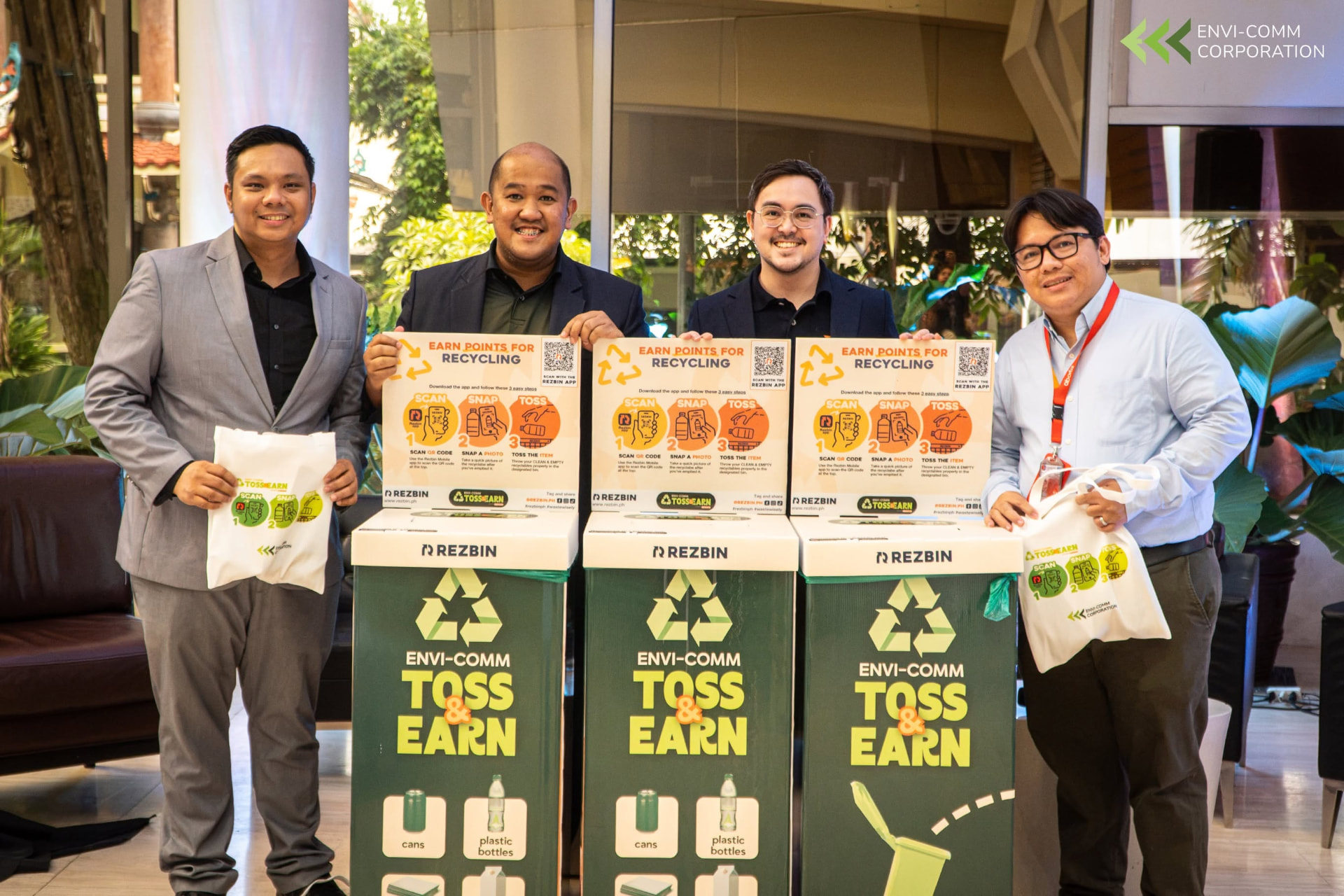
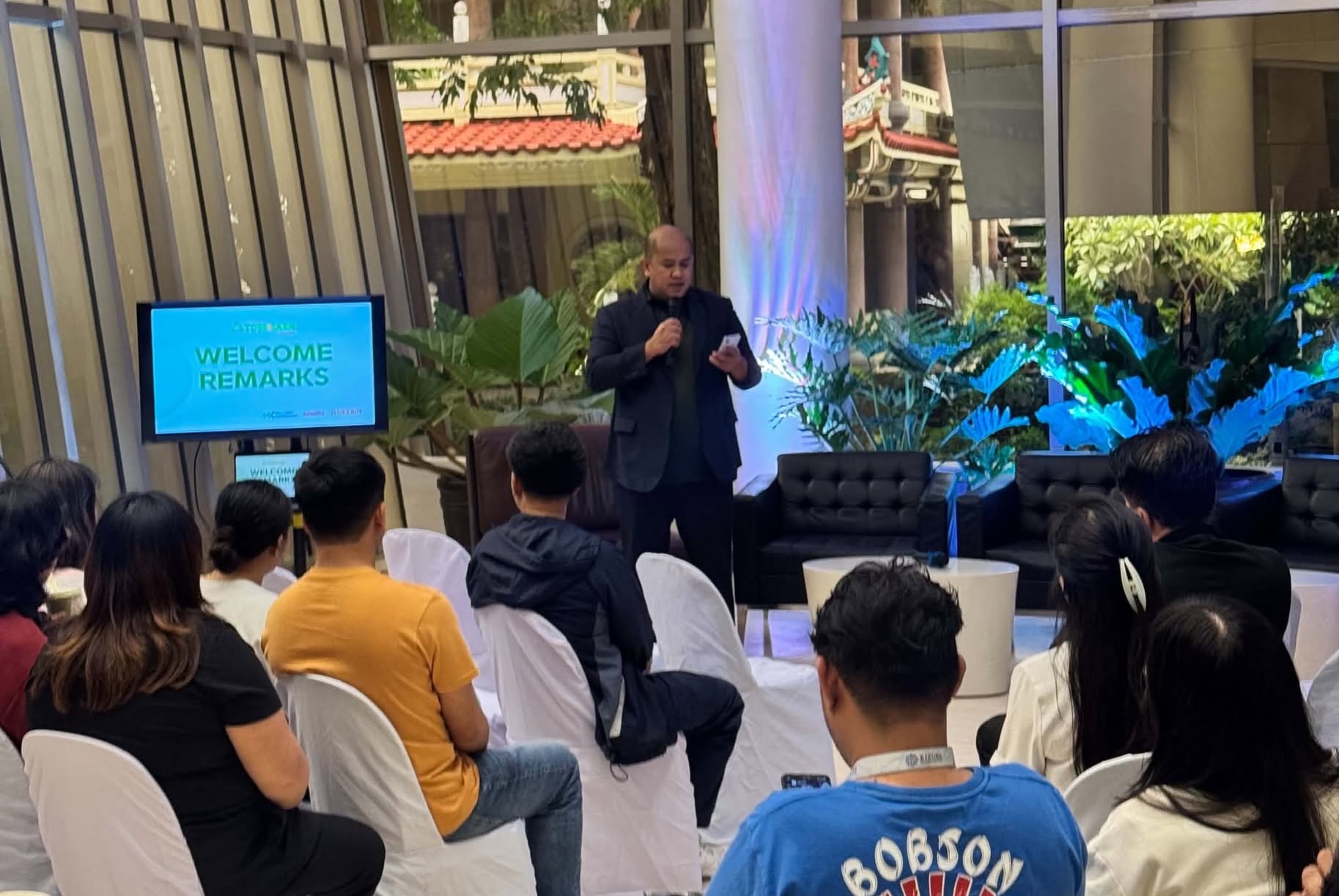
On Friday, September 25, 2026, Cebu-based environmental consultancy Envi-comm Corporation (Envicomm) launched its Toss & Earn Recycling and Rewards Program, powered by Rezbin.ph, at the Aboitiz Corporate Center on Gov. M. Cuenco Avenue in Cebu City.
The launch marks the introduction of a rewards-based recycling drop-off system at a corporate property in Cebu.
But it is important to define what the launch does—and does not—represent.
As of Tuesday morning, September 29, there was little publicly available post-launch data showing how many kilograms of recyclable material had been collected, how many users had registered, or how much material had actually been diverted from the residual waste stream.
That does not mean the pilot has failed. It means the public record is still too early to treat the launch as evidence of citywide diversion.
For SmartCity.ph, that distinction matters.
A corporate pilot, not yet a citywide program
The Aboitiz Corporate Center is the pilot venue for the Cebu rollout. Envicomm's registered business address is also listed at the building, making the site both a corporate setting and a natural operational base for the launch.
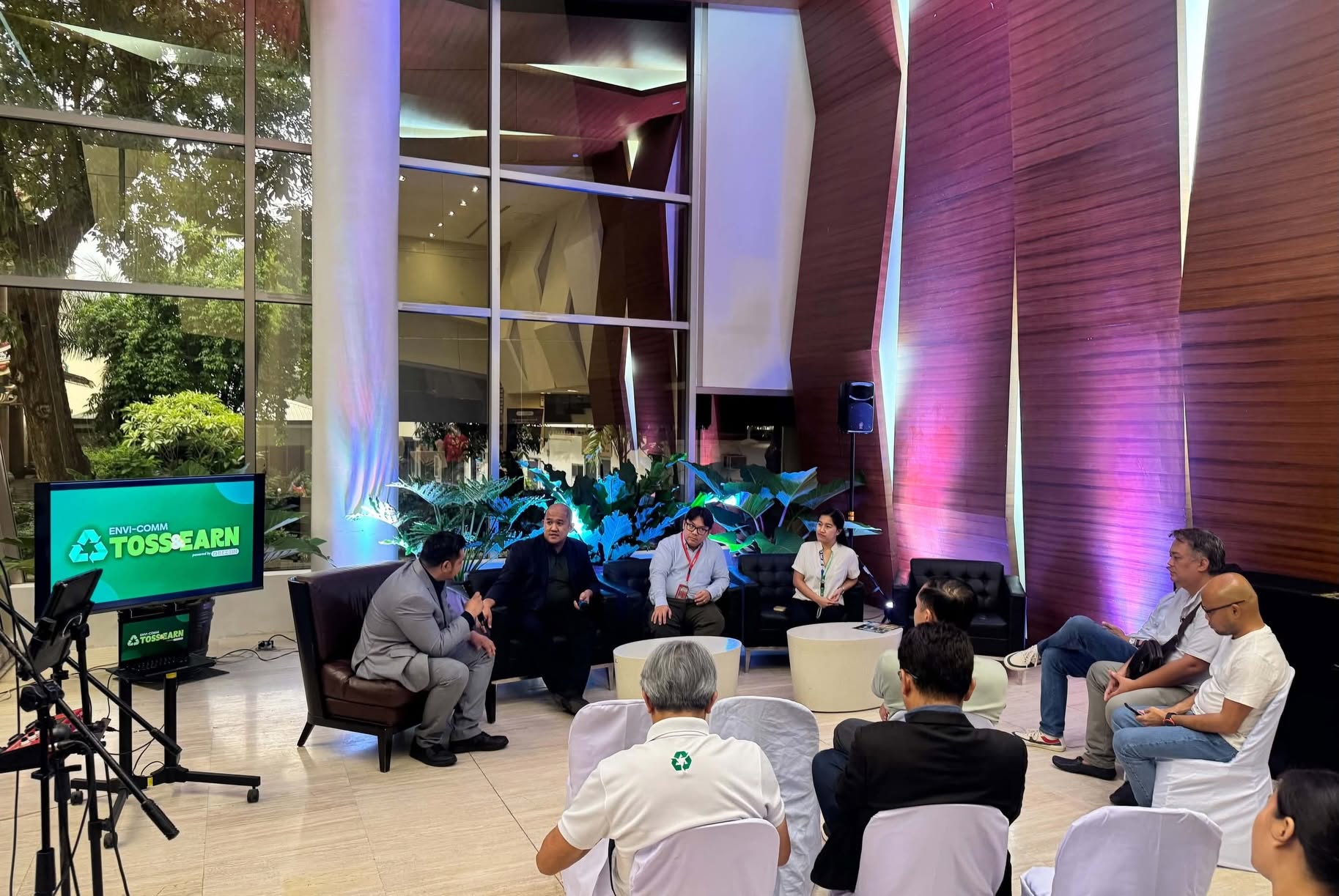
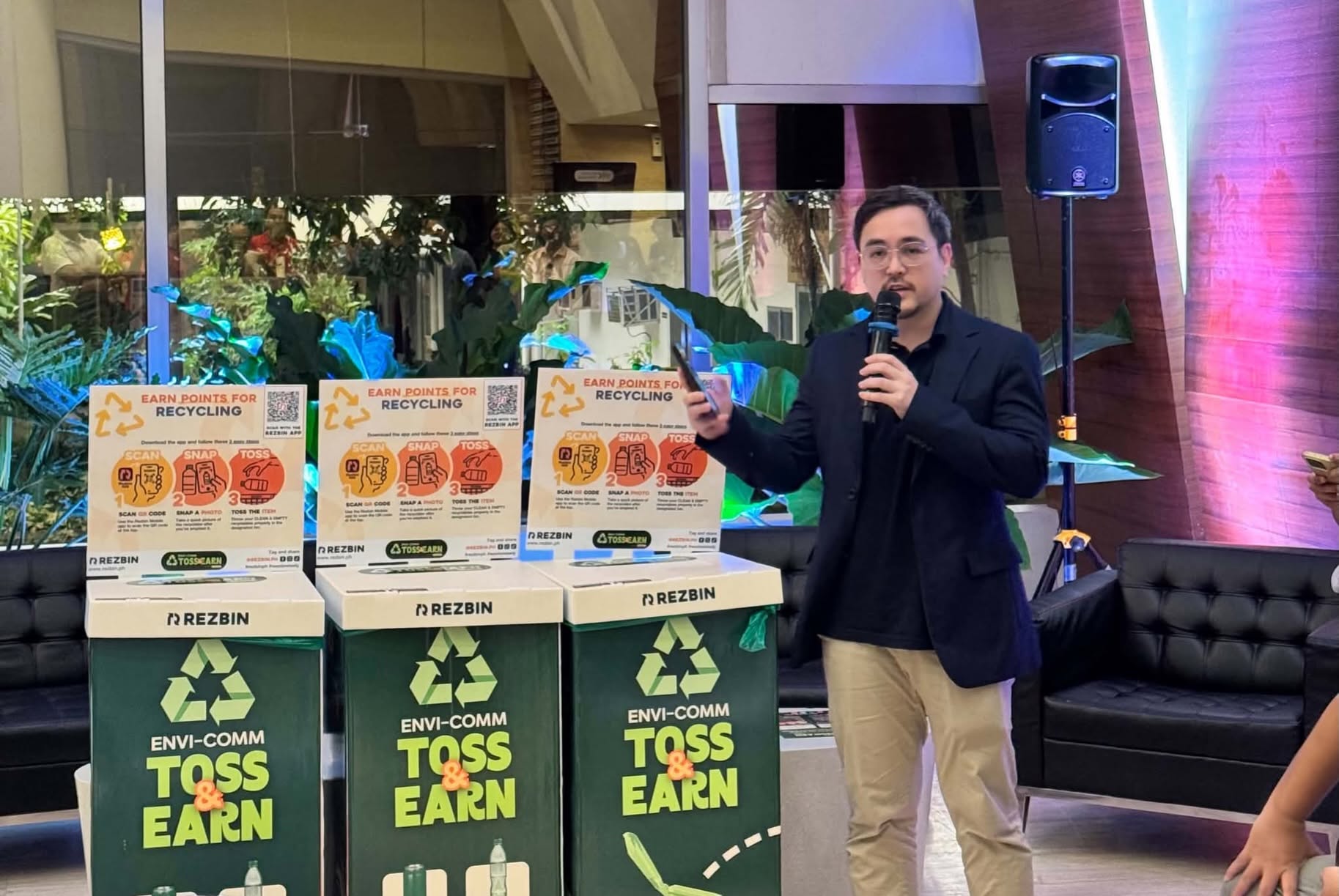
The Rezbin model is designed around a simple behavioral loop: scan, snap, and toss.
Users bring eligible recyclable materials to a tagged collection point, record their deposit through the Rezbin platform, and receive eco-points that can be redeemed through the app. For property administrators, the platform is designed to provide visibility into collection volumes and material categories.
Typical accepted materials include clean, dry paper and cardboard, plastic bottles and containers, and metal cans.
The model therefore combines three elements:
- Behavior: make recycling convenient and rewarding.
- Verification: digitally record the transaction.
- Collection: connect the recyclable material to downstream collectors.
That is a useful proposition for a corporate property.
It is not, by itself, a municipal waste-management system.
As of September 29, there was no publicly reported post-launch tonnage for the Aboitiz site, no publicly documented Cebu-wide EcoStation count, no published participant total, and no publicly identified local-government memorandum of agreement tied specifically to the September 25 launch.
Those numbers may exist internally. But until they are published or independently reconciled, the responsible description is a corporate-property recycling pilot.
Three different scales of success
Recycling initiatives are often discussed as though a corporate collection point, a commercial network, and a city program are the same thing.
They are not.
| Scale | What success looks like | What it does not prove |
|---|---|---|
| Corporate-property pilot | A functioning drop-off experience, participant pathway and property-level collection data | Citywide diversion or landfill relief |
| Multi-property commercial rollout | Consistent stations across multiple properties and property-level sustainability reporting | Municipal waste-policy outcomes |
| City/LGU program | Formal partnership, defined station network, collection partners, public targets and auditable diversion data | That targets automatically translate into verified outcomes |
The distinction becomes clearer when Cebu is compared with another city where Rezbin has entered an LGU partnership.
On June 29, 2026, Iloilo City and Rezbin signed a memorandum of agreement for an incentive-based recycling system under the EU–Philippines Green Economy Partnership's Closing the Loop project.
Contemporary reporting identified plans for 25 stations and a target of at least 7,500 users, with the Uswag Calajunan Livelihood Association identified as a proposed authorized collector.
Those figures are program targets, not audited results.
But structurally, the Iloilo initiative illustrates what changes when a recycling platform moves from a private-property activation to an LGU-scale program: there are defined geographic coverage, institutional partners, collection responsibilities and public targets.
The Cebu launch has not yet reached that stage on the public record.
Why the Cebu timing matters
The pilot arrives at a time when Cebu's waste-management economics are under considerable pressure.
Following the January 8, 2026 Binaliw landfill collapse, Cebu City has continued hauling residual waste toward Aloguinsan. Recent local reporting has put daily hauling-related expenditures at roughly ₱4.2 million to ₱4.5 million, while daily waste generation has been reported at around 700 tons.
Those figures give recycling and diversion a much larger policy context.
Every kilogram that can be reliably separated before entering the residual waste stream has the potential to become part of a different economic chain—one involving recyclables, collectors, materials recovery facilities and downstream buyers rather than residual hauling and disposal.
But the key word is reliably.
A branded collection bin is not the same thing as verified diversion.
That is why the next stage of the Cebu pilot should be measured not by launch photographs or app downloads, but by the material actually moving through the system.
The numbers cities should demand
Whether the next Rezbin deployment is another corporate EcoStation or a formal LGU partnership, there are several metrics that should become standard.
1. Kilograms by material type
Publish weekly and monthly volumes for paper, cardboard, PET, HDPE, PP, metals and other accepted fractions.
A single “total recyclables collected” number is less useful than knowing exactly what materials are entering the system.
2. Contamination and rejects
Collection volume alone can overstate actual diversion.
A useful system should also report contamination and rejected material, allowing operators to distinguish between material deposited and material actually recoverable.
3. Residual waste avoided
Where possible, compare recyclable material captured with the residual waste leaving the participating property or barangay.
This is what connects a recycling program to actual waste-management outcomes.
4. A reconciliation-ready audit trail
Data should include fields such as timestamp, location and material category, together with privacy-safe participant identifiers where necessary.
The objective is simple: a building administrator, Finance team or LGU Environment and Natural Resources Office should be able to reconcile the numbers.
5. A named downstream pathway
Who collects the material?
Where is it sorted?
Who buys it?
What happens to contaminated or rejected material?
The recycling story should not end when material enters a branded bin.
6. Data that the host can export
Whether the host is a building owner, school, barangay or LGU, it should be able to access and export its own collection data.
A dashboard is useful. An auditable dataset is better.
7. A defined pilot period
A 60- or 90-day pilot can provide enough data to determine whether a station deserves to scale.
The decision should then be based on measurable indicators such as kilograms diverted, participation, contamination and—where data permits—avoided residual hauling or disposal costs.
The bigger opportunity: verification
The most interesting part of a rewards-based recycling platform may ultimately be neither the rewards nor the bin.
It is the verification layer.
Cities increasingly need to answer basic questions about their waste systems:
How much waste are we generating? How much is recyclable? How much are we actually recovering? Who collected it? Where did it go? How much residual waste remained?
Those questions require data that can move beyond a CSR presentation and into the operational ledger of a city.
That is where systems such as Rezbin could potentially become useful—not as a substitute for barangay collection, materials recovery facilities, junk shops, waste haulers or local-government enforcement, but as a digital layer connecting parts of the recycling chain.
The technology becomes more valuable as the underlying data becomes more credible.
What to watch next
The next meaningful Cebu update should therefore answer a few straightforward questions.
How many kilograms have been collected since September 25?
How many participants have actually used the system?
Where is the material going?
Who is the downstream collector?
How much material is being rejected?
And, most importantly, how much residual waste is actually being avoided?
There are also broader developments worth watching.
Liloan's implementation of its Pay As You Throw framework could provide another context for understanding how incentives and recycling channels interact with residual-waste pricing. Meanwhile, proposals for large-scale waste-processing facilities in Cebu should continue to be distinguished carefully between proposals, letters of intent and awarded contracts.
The same principle applies across all of these conversations:
Measure the waste before claiming the impact.
The real test begins after launch
The September 25 launch at Aboitiz Corporate Center is a meaningful commercial foothold for rewards-based recycling in Cebu.
But the more important story will come later.
If the pilot produces a transparent record of kilograms collected, material quality, downstream offtake and avoided residual waste, it can become evidence for a larger conversation about corporate properties, schools, barangays and eventually LGU-scale recycling systems.
If it produces only a successful launch event, its impact will be much harder to measure.
For Cebu—and for cities across the Philippines—the standard should be straightforward:
Don't just count the bins. Count the kilograms.
The future of smart waste management will depend not only on making recycling easier, but on making the results measurable, verifiable and useful to the people responsible for managing the city's waste.